Field Service Call-Outs
A specialist guides the job on site instead of driving out to it.
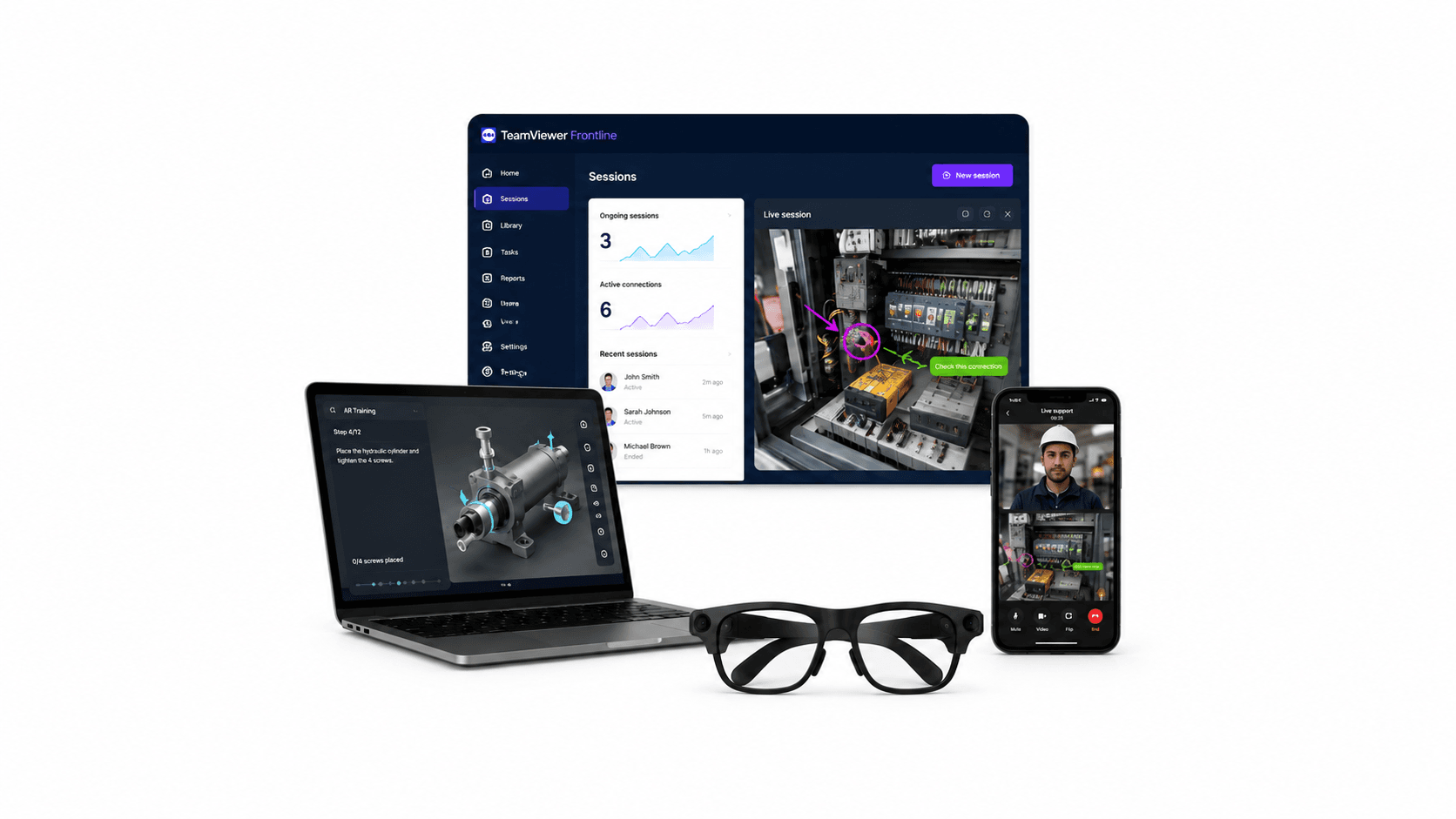
The technician keeps working while a remote expert sees the same view, draws on the live image and talks the job through, with the session recorded as a service record. For field service, manufacturing, utilities and logistics that cuts travel and downtime and lifts first-time fix rates. It pays off wherever you have more sites than specialists.
Field Service Call-Outs
A specialist guides the job on site instead of driving out to it.
Factory Line Downtime
A stopped line gets expert eyes on it in minutes rather than days.
Expert Scarcity
One specialist covers many sites by joining calls instead of traveling.
Onboarding & Training
Juniors work supervised, and recorded calls become training material.
The technician wears the glasses, starts a call and keeps working. The expert sees the same view, speaks into the headset and draws on the image to point at the right terminal or valve, which removes the ambiguity that kills a phone call. Sessions can be recorded, transcribed and summarized, so the fix is documented for the next person rather than living in one engineer's memory. Everything is voice-driven, because a technician on a ladder cannot hold a tablet.
The gain is mostly travel and downtime. A specialist who covers twelve sites stops driving to three of them a week, first-time fix rates go up, and junior technicians get supervised on jobs they would otherwise have escalated. It suits field service, manufacturing, utilities, logistics and any team with more sites than specialists. The hardware side is covered on the remote support glasses page.
TeamViewer Frontline is a modular suite: remote assistance is one module alongside vision picking, guided assembly, inspection and training. Choose it when remote support is part of a wider plan to digitalize frontline work and you want one platform behind all of it. Remote Eye is focused on remote assistance and spreads wide across device types, including desktop browsers, with a low-bandwidth mode and AI call summaries. Choose it when the job is support calls, done well, across a mixed fleet.
Both are licensed per user or per device on annual terms, so settle headcount and who initiates sessions before comparing prices. Then ask the questions that surface later: where video is processed, whether recordings can be retained, and how it fits your service desk. We supply both alongside the rugged smart glasses they run on and the rest of the software range, and will run a demo on your own workflow.